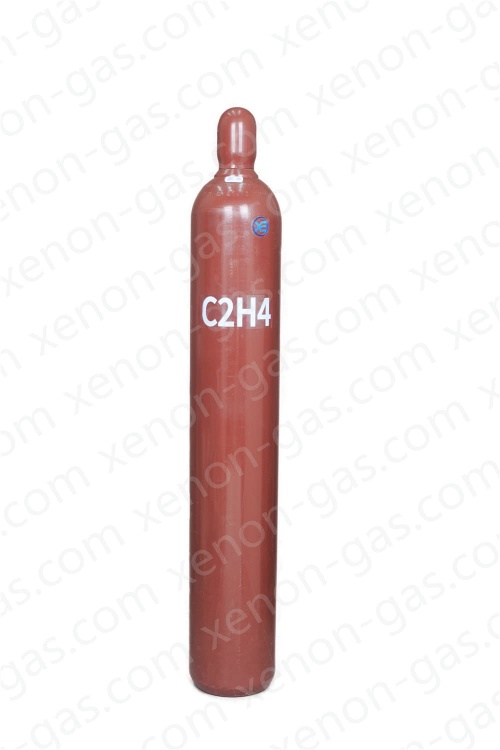
Ethylene (C2H4)
Specifications
- CAS No.: 74-85-1
- UN No.: 1962
- EINECS No.: 200-815-3
- Molecular Weight: 28.06 g/mol
- Appearance: Colorless
- Melting Point: -169.4 ℃
- Boiling Point: -103.9 ℃
- Density: 1.178kg/m³
- Hazard Class (DOT): 2.1
- Label: Flammable gas
High-purity ethylene (C₂H₄) gas for petrochemical synthesis, polymer production, electronics, and fruit ripening.
High-purity ethylene (C₂H₄) gas (99.95%–99.999%) for petrochemical synthesis, polymer production, electronics manufacturing, and fruit ripening applications.
Ethylene is a colorless, flammable gas with a faint sweet odor. As the simplest alkene, it is one of the most fundamental raw materials in the petrochemical industry. It is nearly insoluble in water but soluble in organic solvents like ether and carbon tetrachloride. Ethylene serves as an essential building block for producing polyethylene, ethylene-propylene rubber, and polyvinyl chloride. In organic synthesis, it is widely used for manufacturing ethanol, ethylene oxide, ethylene glycol, acetaldehyde, and propylene. High-purity electronic grade ethylene is an ideal calibration standard for petrochemical analysis, an eco-friendly ripening agent for fruits, and a refrigerant in LNG liquefaction plants, typically transported as a liquefied compressed gas.
Global Shipping & Export Compliance
Ethylene (UN 1962) is classified as a flammable compressed gas and must be handled under strict hazardous materials regulations.
- Sea freight (FCL) – standard export method for cylinder and ISO tank shipments
- Sea freight (LCL) – available for smaller quantities
- Air freight – limited availability (regulatory controlled)
Required Export Documents
As a flammable compressed gas, ethylene shipments require complete hazardous materials documentation for customs clearance and safe transport.
- Material Safety Data Sheet (MSDS)
- Certificate of Analysis (COA)
- Dangerous Goods Declaration (DGD)
- UN-certified cylinder documentation
- Commercial invoice & packing list
How to Order Ethylene Gas from China
- Send technical requirements – purity, pressure, cylinder specifications, and application
- Receive quotation – EXW / FOB / CIF options available
- Confirm cylinder specification & compliance – select appropriate valve and pressure rating
- Review COA, MSDS, and certification documents – verify quality and regulatory compliance
- Production, filling, and quality inspection – gas sourced from qualified partner facilities with strict QC
- Hazardous goods shipping arrangement – secure booking with experienced freight forwarders
- Delivery and final inspection at destination – ensure product arrives to your satisfaction
Common Mistakes When Buying Ethylene Gas
- Choosing suppliers based only on lowest price
- Ignoring cylinder certification and pressure rating requirements
- Not verifying moisture and impurity levels for your specific application
- Skipping third-party inspection before shipment
- Overlooking export documentation compliance
- Not confirming the origin and quality control of the gas (critical when working with trading companies)
Packaging
| Gas Cylinder Specifications | Contents | |
| Cylinder Capacity | Cylinder Valve | Weight |
| 40L | QF-30 / CGA350 | 10kg |
| 47L | CGA350 | 13kg |
| 50L | CGA350 | 16kg |
Electronic Grade Ethylene (C2H4) 99.999%
| Purity | 99.999% |
| Nitrogen (N2) | ≤ 1.5ppmv |
| Oxygen (O2) +Argon Gas (Ar) | ≤ 0.3ppmv |
| Carbon Monoxide (CO) | ≤ 0.1ppmv |
| Carbon Dioxide (CO2) | ≤ 0.1ppmv |
| Acetylene (C2H2) | ≤ 0.2ppmv |
| Moisture | ≤ 0.8ppmv |
| Other Hydrocarbons | ≤ 0.6ppmv |
Industrial Grade Ethylene (C2H4) 99.95%
| Purity | 99.95% |
| Methane (CH4)+Ethane (C2H6) | ≤ 500ppm |
| Propane (C3) & Propane Plus (C3+) | ≤ 10ppm |
| Carbon Monoxide (CO) | ≤ 1ppm |
| Carbon dioxide (CO2) | ≤ 5ppm |
| Hydrogen (H2) | ≤ 5ppm |
| Oxygen (O2) | ≤ 2ppm |
| Acetylene (C2H2) | ≤ 3ppm |
| Sulfur (S) | ≤ 1 mg/kg |
| Moisture | ≤ 5ppm |
| Methanol (CH3OH) | ≤ 5 mg/kg |
| Ethyl Alcohol | ≤ 1 mg/kg |
Frequently Asked Questions